safety

  • |

    Garage Door Child Safety

    Have you had a conversation with your children about the garage door? Garage doors are a typical part of life for adults, but children are often fascinated by them. Your residential garage door is loud, large, and moves without anyone getting near it – it isn’t so hard to understand why children find them interesting! This wouldn’t normally be a problem because garage doors are quite safe if they’re treated carefully, but there are cases of garage doors breaking or collapsing, or of their safety features failing. Either of these can be dangerous to inattentive children, and educating your kids about the garage door can literally save lives.

  • Garage Door Safety: Keypad

    Does your garage door have a keypad? The keypad is one of the most convenient and most common ways for homeowners to open their garage door. It saves you the trouble of having to carry a remote, it is perfect if you have children that play outside, and it can even save you some humiliation if you end up locked out of your home! What most people don’t think about, however, is that fact that a keypad introduces some new security risks into your system. Older keypads in particular can be very dangerous to use, because tech-savvy thieves will sometimes target the garage door opener as the best mechanism for gaining access to your home. Luckily, there are a couple simple steps that anyone can take to make sure that their family stays safe!

  • How to: Check your Garage Door’s Safety Features

    Do you know what would happen if you stepped underneath your garage door? Homeowners rarely think about the true power of their garage door, but consider this – not only is the garage door the largest moving appliance in the home, but it is also extremely heavy. A two-car garage door could weigh over three hundred pounds easily! Think about that every time that you or your children run underneath the door while its opening or closing, and it might give you reason to examine the safety features of your door and make sure that they are functioning properly. Luckily, the two most basic safety features of the door are easy enough to check, and we’ll explain just what you should do now!

  • |

    Mold Monster! What’s Lurking in your Walls?

    Is there a nasty surprise lurking in your home, hidden but threatening your family’s safety? Every homeowner knows the dangers of mold, but oftentimes mold goes unseen until it has already taken a firm hold. An improperly built garage presents a perfect environment for mold to take hold, so we’ve gathered some information that every homeowner should know – why mold will grow in your home, what you can do to prevent it before it ever appears, and how to get rid of it if you do find some! Like garage doors, homeowners can do some of the simpler preventative measures and fixes, but for more serious problems it is always better to call a professional!

  • Batcave Garage Makeover!

    We’ve worked on some wonderful homes with gorgeous garages, but this custom garage added to a Melbourne estate by Molecule architectural firm is way crazier than anything we’ve ever seen. If you’ve ever wanted to live like millionaire playboy Bruce Wayne (of Batman fame), this garage may just make you envious…

  • Doggy Garage: How to Keep Your Pet Safe!

    For many homeowners, our pets are just as much a part of our family as any of the humans in our lives. Pets can always cheer up someone going through a hard time, or comfort someone who just needs to be loved. Most pet owners love and care for their animals, but unfortunately some are either uninformed or neglectful, and pets suffer because of their lack of care. One common way that dogs especially are mistreated is by being left locked up in the garage, and given our line of work this is a particularly concerning issue for all of us at A Plus. We love our pets and know that our readers do as well, so today we’re going to educate you about why you shouldn’t leave your dog in the garage if it can be avoided, and if you have to leave your dog in the garage, what you should do to protect them.

  • |

    Shut The (Garage) Door on Burglars!

    We’ve said it before and we’ll say it again – the most important step a homeowner can take to protecting the contents of their garage is to close the garage door! Although that might sound obvious, everyone can remember a time that they left their garage door open. Maybe, some of you reading this routinely leave your door open. Or maybe, you were doing some yard work in the backyard and left the door open on the front of your home so you could put your tools away. The simple convenience of not having to worry about the door is appealing, but ask yourself if it is worth risking a break in – or worse – and you might reconsider.

  • Doggie Day Care

    The summer may be coming to a close, but that doesn’t mean that the heat is going anywhere! All of us here at A Plus Garage Doors are huge animal fans, but we often can’t bring our pets with us when we leave the home. Most stores won’t allow pets of course, and with the temperature outside, leaving them in the car isn’t an option. Although there may be no easy solution to this problem in the Charlotte area, Dr. Mary Traverse from Austin, Texas, has found a way to let pet owners take their dogs with them on errands, without placing them at risk.

  • DIY: Adding Weatherstripping to Your Garage Door

    If you read our previous blog post about R-Value, you probably know that insulating your garage is an important step in keeping your utility bills down and making your garage a pleasant room to be in during the heat of summer or the cold of winter. But if you’re not interested in upgrading to a better insulated garage door, your next best bet might be adding weatherstripping (also called astragal) around your door. We’ll walk you through this simple DIY procedure for sealing the top, sides, and bottom of your door, all of which can be done on a tiny budget.

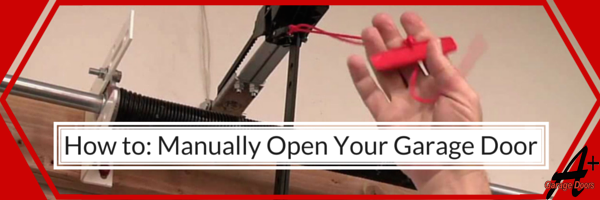
  • How to: Manually Operate Your Garage Door

    With the recent storms in and around Charlotte, as well as the tropical storm headed for Florida, it is reasonable for our readers to be concerned about their house’s power. If your home loses power, your garage door opener will also run out of juice, and you might be unable to get your cars out of your garage! If your door is properly maintained, you should be able to open it manually, and we’ll explain how to do so in this article.

  • Has Lightning Damaged your Garage Door Opener?

    Have the recent summer storms around Charlotte been raining on your parade? Not only have we been experiencing severe storms and torrential rainfall, but of course these storms are accompanied by thunder and lightning. Lightning in particular can be dangerous, to people and possessions. Many families know to unplug their valuable electronics from the wall outlets or to use surge protectors, in order to protect these appliances and computers, but your garage door opener is also at risk. If you’ve been experiencing strange problems from your opener, a lightning strike may be the cause. We’re experts in garage door repair and we’ve collected a list of ways to identify if your garage door opener may have been damaged by a power surge, so read on to see if this applies to you!

  • Your Home’s Secret Energy Cost!

    Can you imagine life without a garage door opener? Your parents or grandparents lived without them for years, of course, but the modern convenience of pulling up your driveway and seeing the door already opening is a welcome sight. The concept of having to park your car in front of the door, get out into the heat or rain, and manually lift the door isn’t just annoying, it is also a huge safety risk. Your garage door opener is responsible for holding the door closed until your specially coded remote opens it. What you probably don’t know about your opener is that it might be costing you hundreds of dollars a year.